



Solutions
CLOUD COMPUTING
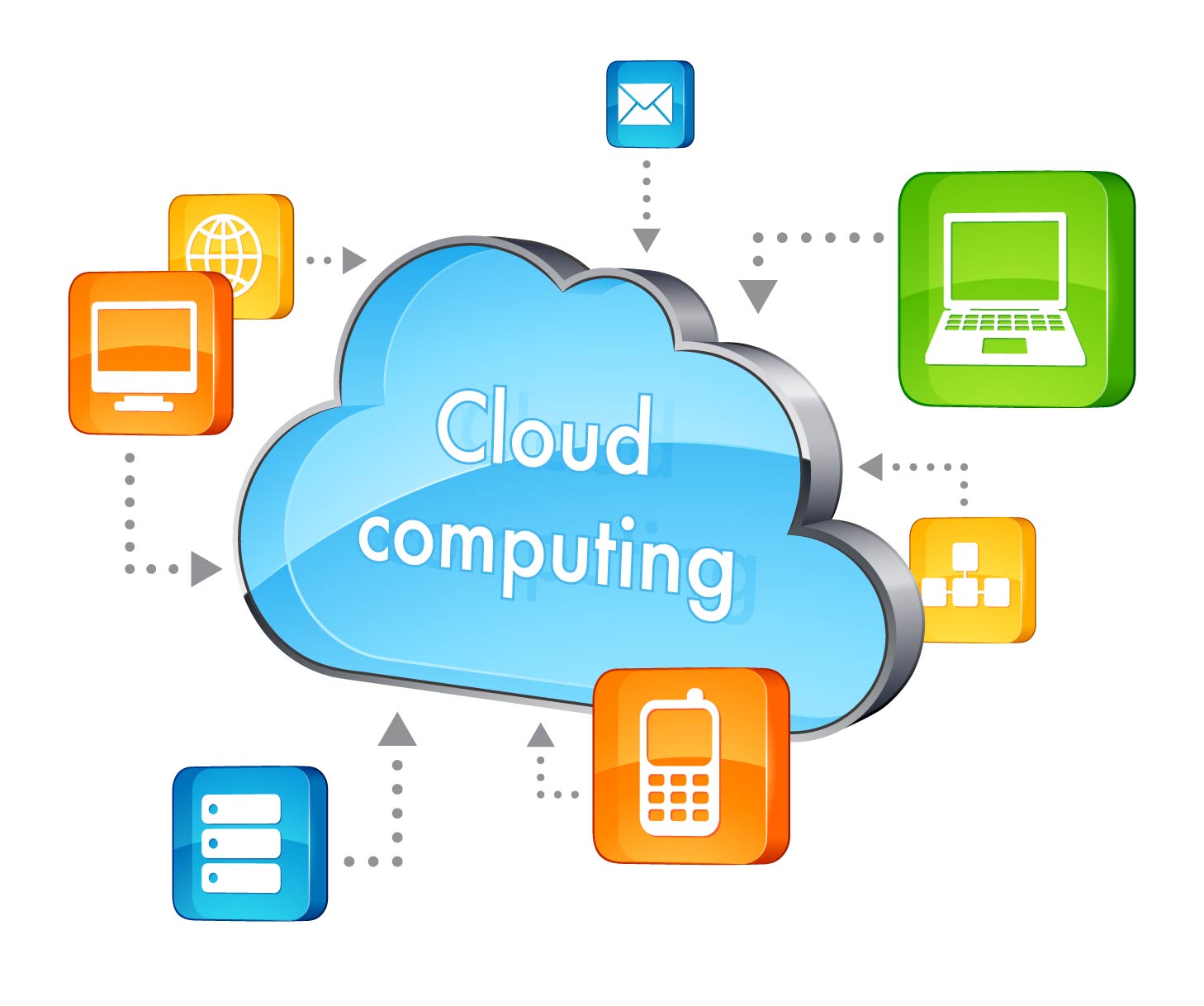
Cloud computing relies on sharing of resources to achieve coherence and economies of scale, similar to a utility (like the electricity grid) over a network. At the foundation of cloud computing is the broader concept of converged infrastructure and shared services.Cloud computing, or in simpler shorthand just "the cloud", also focuses on maximizing the effectiveness of the shared resources. Cloud resources are usually not only shared by multiple users but are also dynamically reallocated per demand. This can work for allocating resources to users. For example, a cloud computer facility that serves European users during European business hours with a specific application (e.g., email) may reallocate the same resources to serve North American users during North America's business hours with a different application (e.g., a web server). This approach should maximize the use of computing power thus reducing environmental damage as well since less power, air conditioning, rack space, etc. are required for a variety of functions. With cloud computing, multiple users can access a single server to retrieve and update their data without purchasing licenses for different applications.
ANDROID APPLICATIONS
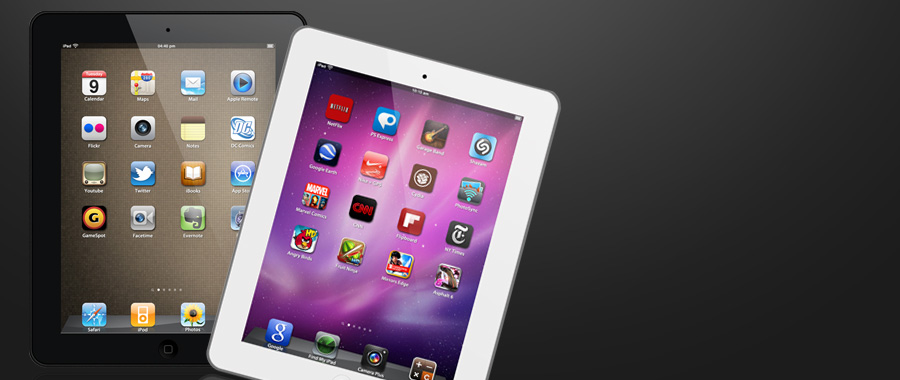
Android is a mobile operating system (OS) based on the Linux kernel and currently developed by Google. With a user interface based on direct manipulation, Android is designed primarily for touchscreen mobile devices such as smartphonesand tablet computers, with specialized user interfaces for televisions (Android TV), cars (Android Auto), and wrist watches (Android Wear). The OS uses touch inputs that loosely correspond to real-world actions, like swiping, tapping, pinching, and reverse pinching to manipulate on-screen objects, and a virtual keyboard. Despite being primarily designed for touchscreen input, it has also been used in game consoles, digital cameras, regular PCs, and other electronics. As of 2015, Android has the largest installed base of all operating systems.
DATA MINING & BIG DATA
Data mining is a term from computer science. Sometimes it is also called knowledge discovery in databases (KDD). Data mining is about finding new information in a lot ofdata. The information obtained from data mining is hopefully both new and useful.In many cases, data is stored so it can be used later. The data is saved with a goal. For example, a store wants to save what has been bought. They want to do this to know how much they should buy themselves, to have enough to sell later. Saving this information, makes a lot of data. The data is usually saved in a database. The reason why data is saved iscalled the first use.
NETEORK SECURITY
A network security policy, or NSP, is a generic document that outlines rules for computer network access, determines how policies are enforced and lays out some of the basic architecture of the company security/ network security environment.
WIRELESS SENSOR NETWORKS
A wireless sensor network (WSN) (sometimes called a wireless sensor and actor network(WSAN)) are spatially distributed autonomous sensors to monitor physical or environmental conditions, such as temperature, sound, pressure, etc. and to cooperatively pass their data through the network to a main location. The more modern networks are bi-directional, also enabling control of sensor activity. The development of wireless sensor networks was motivated by military applications such as battlefield surveillance; today such networks are used in many industrial and consumer applications, such as industrial process monitoring and control, machine health monitoring, and so on.
MOBILE COMPUTING
Mobile computing is human–computer interaction by which a computer is expected to be transported during normal usage. Mobile computing involves mobile communication, mobile hardware, and mobile software. Communication issues include ad hoc and infrastructure networks as well as communication properties, protocols, data formats and concrete technologies. Hardware includes mobile devices or device components.Mobile software deals with the characteristics and requirements of mobile applications.
PARALLEL & DISTRIBUTED COMPUTING
Distributed computing is a field of computer science that studies distributed systems. A distributed system is a software system in which components located on networked computers communicate and coordinate their actions by passing messages.The components interact with each other in order to achieve a common goal. Three significant characteristics of distributed systems are: concurrency of components, lack of a global clock, and independent failure of components.Examples of distributed systems vary from SOA-based systems to massively multiplayer online games to peer-to-peer applications.
IMAGE PROCESSING
Image processing is processing of images using mathematical operations by using any form of signal processing for which the input is an image, such as a photograph or video frame; the output of image processing may be either an image or a set of characteristics or parameters related to the image. Most image-processing techniques involve treating the image as a two-dimensional signal and applying standard signal-processing techniques to it.